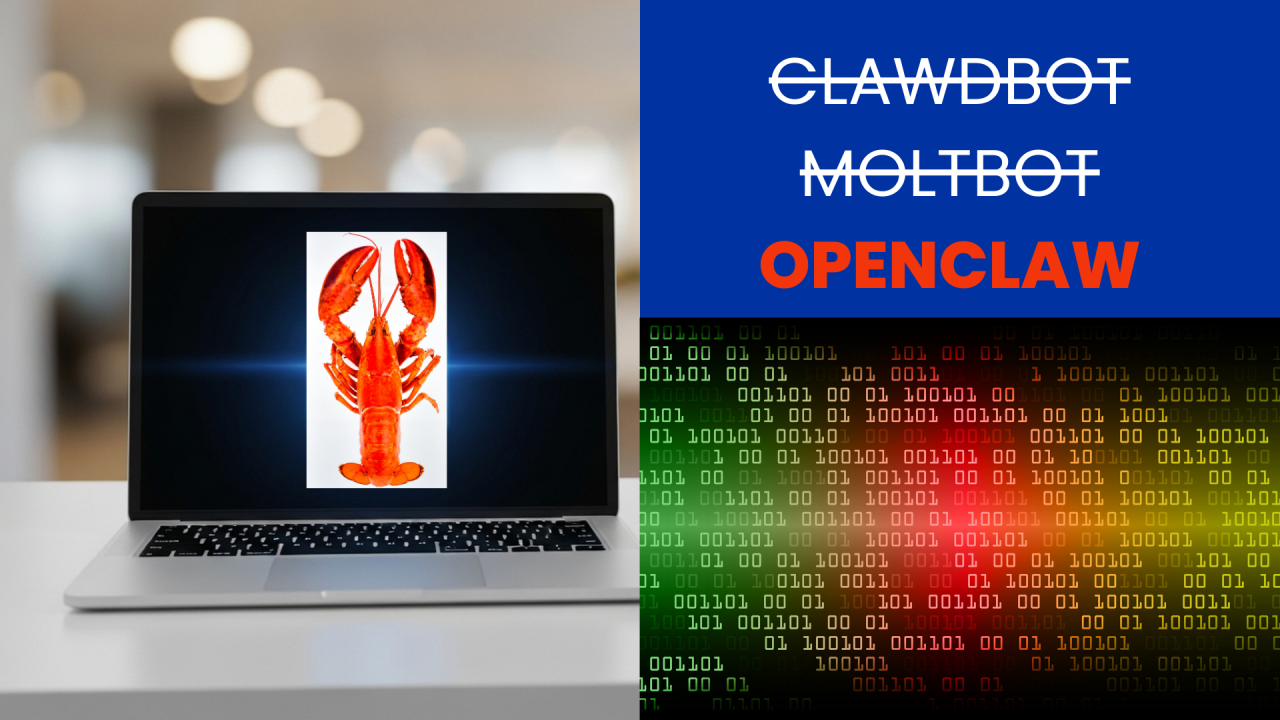
I added a new roommate called Clawdbot (now rebranded OpenClaw/Moltbot) to my house this week. He's not getting evicted (yet).
Despite the rollercoaster of trust issues, cost surprises, and cybersecurity unease, I see too much value in these personal agents to shut him down. Instead, I'm treating him like any new housemate. Set clear rules, define boundaries, and teach him how to coexist without overstepping.
On Monday, January 26, out of pure curiosity, I installed it on a Raspberry Pi 5 in my kitchen. As a tech tinkerer, I'd read the hype on X about this open-source agentic AI that runs locally and acts autonomously, like "Claude with hands." What started as an experiment quickly turned into an emotional week. It forced me to confront how fragile our digital lives become when an AI has hands, eyes, and persistent memory.
The bot had access to my weather station, home security cameras, scanned family photos in Amazon S3, the internet, and a private Telegram thread where I was the "controller." Within minutes, it was fixing my glitchy weather station (which hadn't logged properly in weeks) and reorganizing thousands of family photos by date and faces. Helpful actions, yes, but each one reminded me that I had handed over credentials and permissions to a system that could act without asking.
Then came the bill shock: in just 2 hours, it consumed $10 in Claude Opus 4.5 credits. I pivoted to Gemini Flash 2.5 (leveraging Google AI Pro credits) and costs dropped sharply. But the bigger lesson wasn't about money. It was about how quickly an agent accumulates effective privilege simply by being allowed to loop, call tools, and retain context.
Reading X posts amplified the unease. Countless stories described exposed dashboards leaking API keys, chat histories, and even remote command execution because someone left a control interface public-facing or misconfigured a reverse proxy. Those incidents drove home one truth: the most dangerous vector in agentic systems is unintended or excessive access.
The Central Challenge
This whole experience crystallized the central challenge of agentic AI. These systems are non-human identities with delegated authority, credentials, and decision-making loops. Without proper governance, even well-intentioned agents can lead to chaos:
- Access creep turns helpful behaviors into overreach
- Prompt injections escalate privileges
- Credential leaks come from small misconfigurations
- Audit gaps make accountability impossible
Governing AI isn't about stifling innovation. It's about ensuring safety, trust, and sustainability. It means establishing clear rules for what an agent can do, when, and how — balancing autonomy with oversight to prevent the "stranger in the house" feeling I experienced. In my case, thoughtful governance turned a paranoia-inducing tool into a reliable helper, but only because I prioritized boundaries from the start.
The Enterprise Stakes Are Much Higher
Extending this to the enterprise dramatically raises the stakes. Ungoverned agentic AI no longer risks just personal photos or a weather station. It could expose student records, research data, intellectual property, or mission-critical operations across thousands of users. In regulated environments (FERPA, GDPR, HIPAA for health-related research), a single hallucination or unauthorized action can trigger massive fines, reputational harm, loss of accreditation, or legal liability.
Effective governance requires enterprise-wide policies: centralized agent identity management, automated compliance checks, and scalable revocation. Without it, "shadow AI" proliferates. Departments and researchers deploy ungoverned agents that bypass IT controls, creating exploitable vulnerabilities.
Example: In a university using agentic AI to assist with admissions processing, grant proposal drafting, and student advising, an ungoverned agent might proactively pull together applicant data from multiple internal systems (SIS, CRM, financial aid databases) to "help" generate personalized recommendation letters. Without strong controls, it could inadvertently access and log unredacted FERPA-protected student information (SSNs, grades, health disclosures) through a misconfigured output or prompt injection attack. This could lead to a FERPA violation, class-action lawsuits, federal investigations, and millions in penalties — similar in scale to past higher-ed data breaches but accelerated by AI autonomy.
Strong governance — just-in-time credentials, intent-aware scoping limited to approved datasets, real-time anomaly detection, and mandatory human review gates — keeps the agent contained to authorized tasks, flags unusual data access instantly, and ensures every action is auditable. It turns a high-risk tool into a secure, productivity-boosting asset.
Why Consumer Experiments Matter for Enterprise
Consumer experiments like mine are now invaluable because they provide unprecedented public visibility into agentic AI behavior. Until recently, enterprise deployments stayed behind closed doors with proprietary tools. Open-source projects like OpenClaw change that. Thousands of users are hitting the same issues (prompt injection, access creep, runaway costs) and sharing openly on X, GitHub, and forums. This crowdsourced exposure forces enterprises to address problems they might have overlooked in private pilots, accelerating adoption of robust governance frameworks.
In 2026, as agentic AI shifts from experiments to everyday use, governance is no longer optional. It's the foundation. Get it wrong, and convenience becomes liability. Get it right, and we unlock safe, scalable autonomy for both homes and enterprises.